
Technovation AI Forward Alliance is a community of practice uniting companies, foundations, NGOs, ministries of education, and governments around one goal. We are preparing 25 million young women to build with AI. We start where the talent gap is widest because our research shows that's where the return is highest.

Fewer than 1 in 200 workers build technology, and every company deploying AI recruits from an even smaller talent pool. Women are the largest source of untapped talent1 despite over a decade of coding programs for young women.2 The risk is also rising: in high-income countries, 9.6% of women’s jobs are highly exposed to AI automation, compared with 3.5% of men’s.3 So why hasn’t the gap moved?
Three common approaches reach a lot of students and change very little:
Free online courses often achieve scale, but Harvard and MIT's own data showed completion rates stayed low for six years straight, and most learners never came back after their first year.4 Over 90% of online learners struggle with self-discipline and motivation.5
Q&A platforms, one-time career talks, and AI mentoring deliver advice to many students at low cost. But the benefit of mentoring comes from the relationship. We see this in Technovation’s programs, and it bears out in external research. In a study of 1,138 young people, those whose mentoring relationships lasted a year or longer showed the most improvement, and the effects shrank the earlier a mentoring relationship ended.6
Four ingredients have to come together for skills to last: role models, real-world projects, lasting mentorship, and a community to belong to.
Technovation AI Forward Alliance brings together these ingredients in one system.
It costs about $48 to train one builder through Technovation's three-month program at national scale. Paired with a mentor, she has a 71% chance of pursuing a career in tech,11 where she earns 4 to 6x as much as she would in a service role.
This path, repeated at scale, doubles the number of women working as tech professionals from 4 million to 8 million by 2038 and adds about $212 billion to the global economy.
Figures on this page come from our 2024 Women in AI report unless footnoted.
In 2024, Saïd Business School, University of Oxford, joined the Alliance as its academic partner. Together we built An AI Economy: Strategy, Leadership and the Innovator's Path, an online executive program for Technovation mentors, alumnae, and Women Techmakers. Explore the Oxford program →
In 2025, Technovation launched a new accelerator in collaboration with Generation Unlimited. In its first year, it welcomed over 1,000 founders and resulted in 250+ AI startups. Explore the Accelerator →
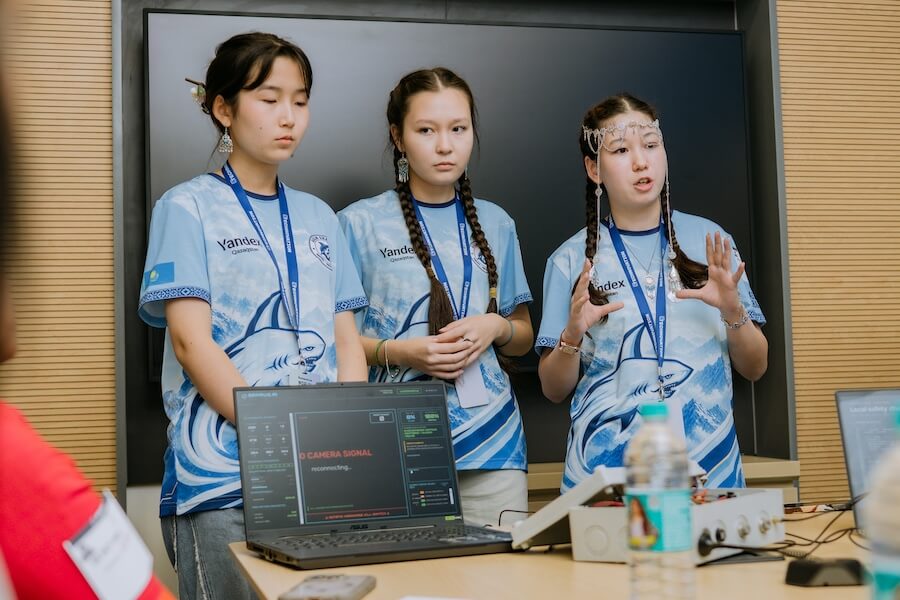
SAMRUQ.AI reads methane, temperature, and pressure underground and uses AI to tell crews when to get out.
Read more →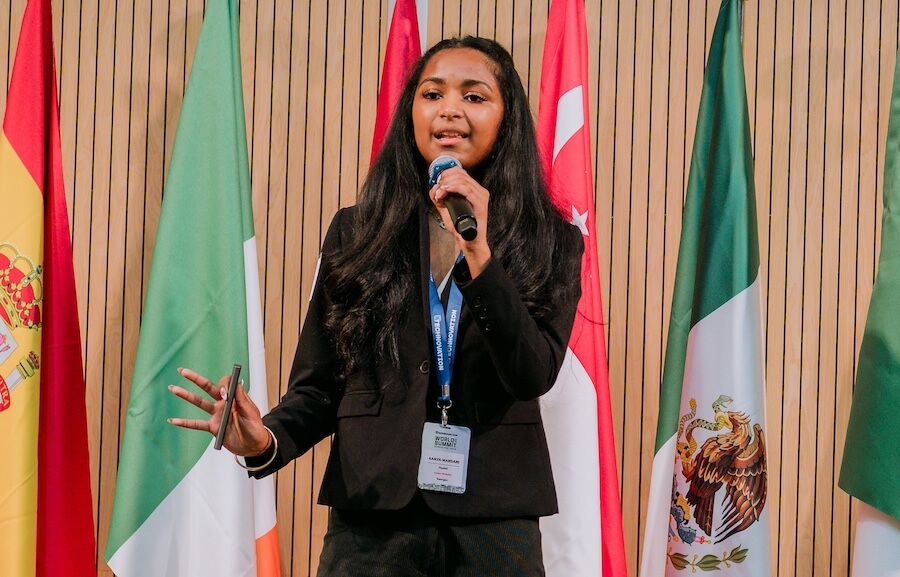
Emergen puts a person's medical history behind a code that first responders can scan without an app or a passcode.
Read more →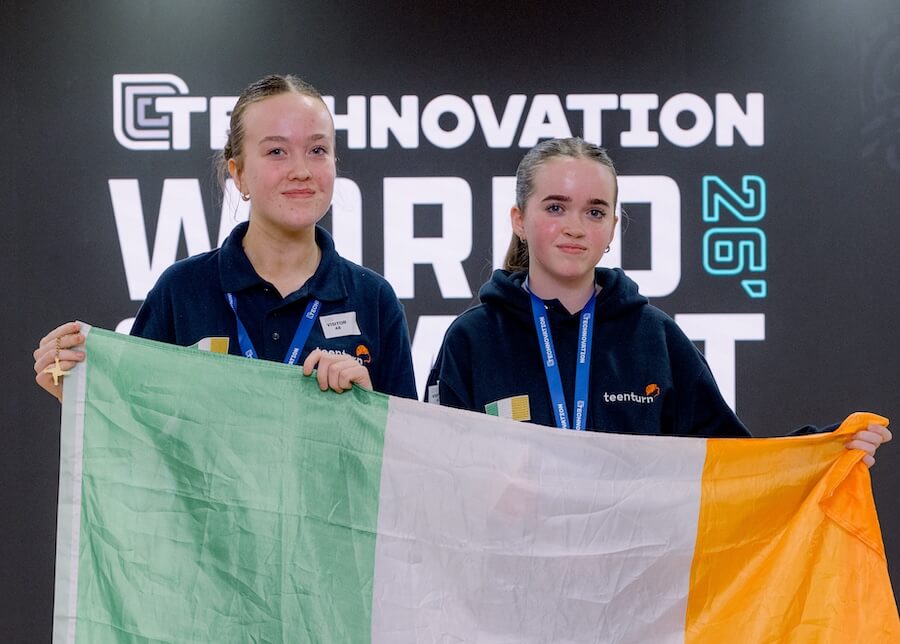
DiAssist helps teens snap a picture of a meal to get nutrition info they need to manage blood glucose.
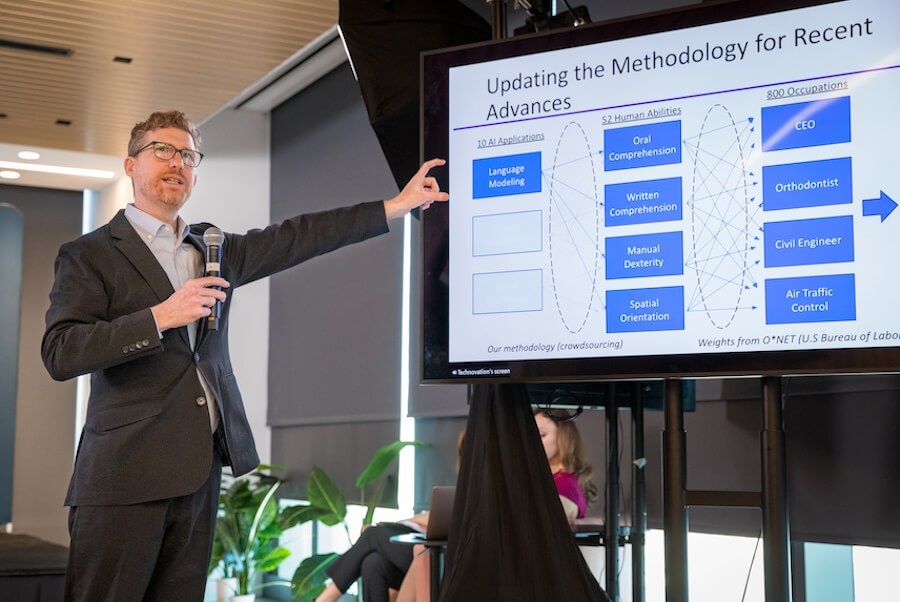
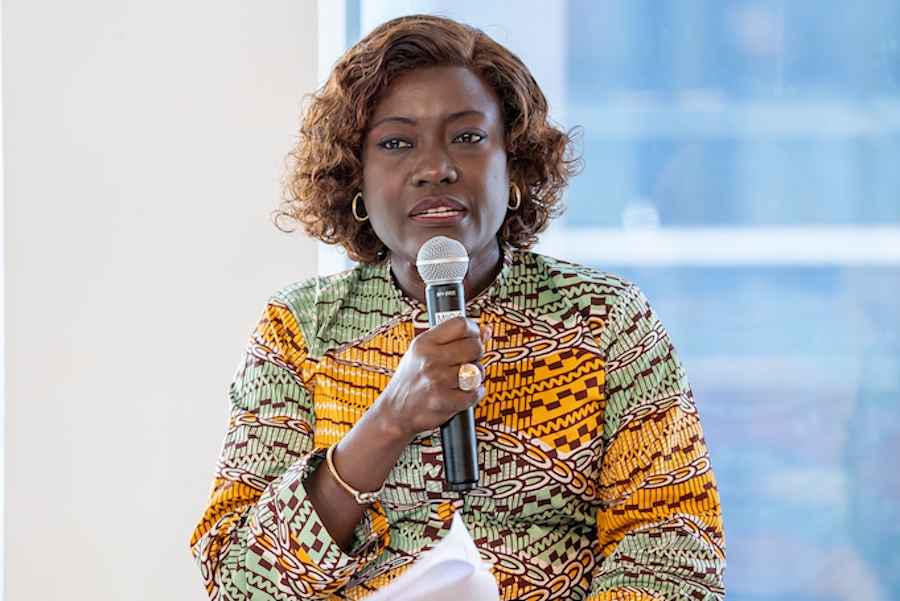
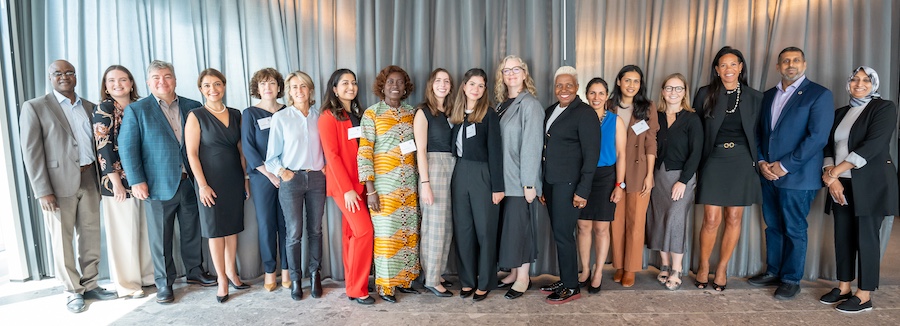
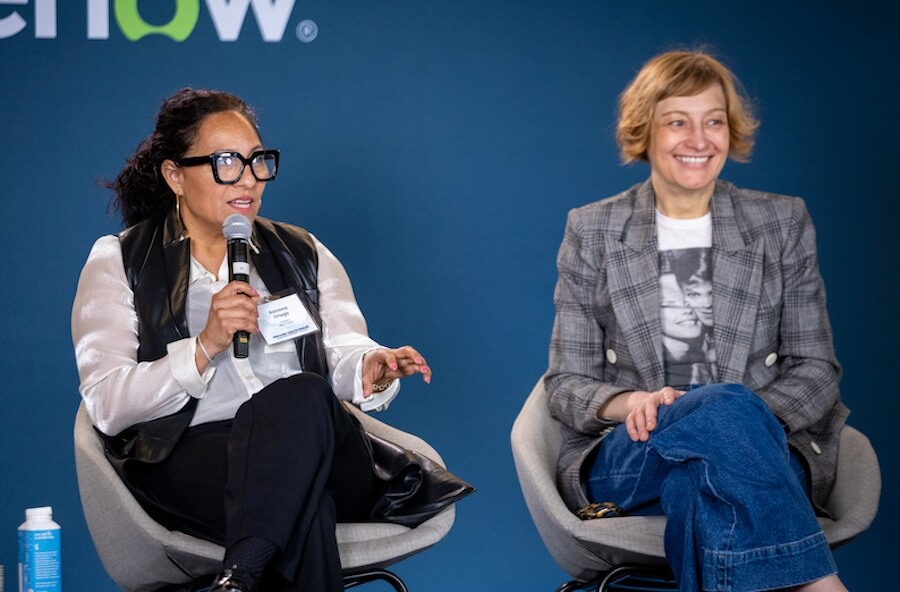
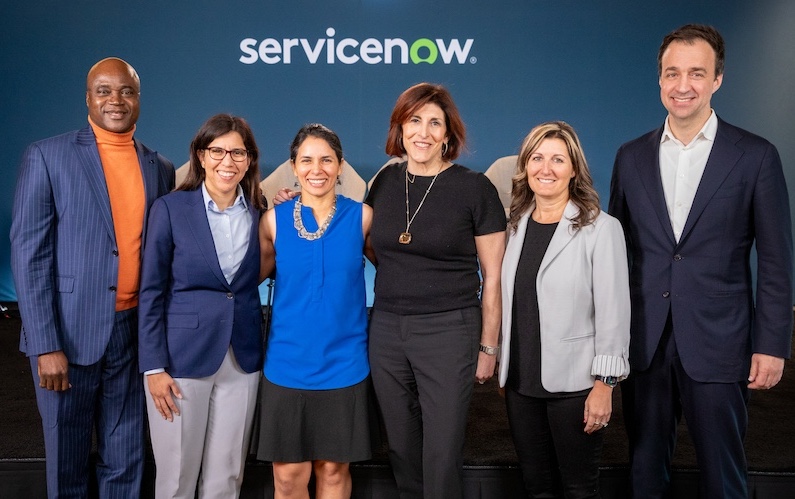
Read more →Every year since 2023, we have brought the people shaping AI to the United Nations. Daphne Koller on AI in drug discovery. Manuela Veloso on AI in finance. Côte d’Ivoire’s Minister of National Education on building AI skills across a national school system. NYU’s Robert Seamans on which jobs AI will change most. Panels share the stage with build sprints, and executives get to see the talent they’re looking for at work.





Each member brings its knowledge, network, or capital to a different part of the pipeline.







Copyright 2026 Technovation. All Rights Reserved
in the United States


